


ETA SPOT
3.3610.00 Reviews
App Specs
- Version
- 1.17
- Updated On
- License
- Free
- Downloads
- 100,000+
- Developer
- ETA Inc.
- Categories
- Maps & Navigation
- Platform
- Android
Screenshots

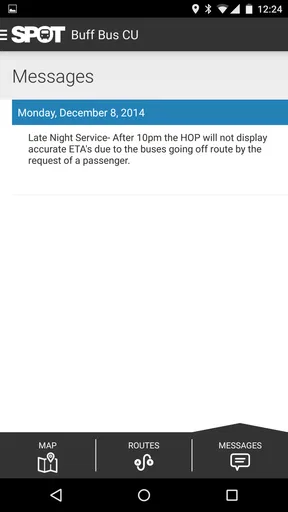
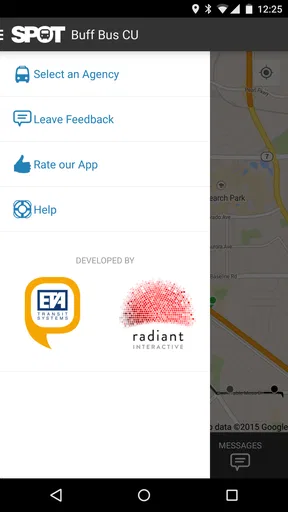
 Analysis by AppCompare
I use a lot of transit tools, but I usually judge them by one question: do they help me decide when to leave, or do they only show me where I am? ETA SPOT is built around the more useful question. This free Maps & Navigation app from ETA Inc. focuses on arrival predictions and route planning for people who travel by public transport. That narrow purpose gives it a clear identity, even though it also means it is not a complete replacement for every navigation service.
At its best, ETA SPOT helps turn a vague journey into a practical departure decision. Instead of simply looking at a map and guessing how long the trip might take, I can use the app to think in terms of arrival time, route choice, and the amount of uncertainty involved in getting there. That is especially valuable when missing a connection would make the rest of the trip inconvenient.
The app is made for Everyone and is free to use. It has been available since February 16, 2015, and the current version is 1.17, compatible with devices running Android 5.0 or later. Its average rating is 3.3 from around 1.2 thousand ratings, with over 600 written reviews and more than 100 thousand installs. Those figures suggest a modest but established audience rather than a brand-new experiment.
Arrival predictions are the reason to try it
I’d begin this section by separating a useful estimate from a promise: the point is to make a departure choice with a clearer sense of timing, not to assume every trip will run exactly as planned. I also look at how connection quality can affect the moment when I need that answer, especially before committing to a route.
A different way to think about a transit journey
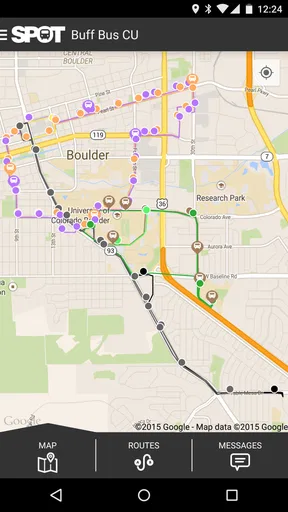
Many navigation apps begin with a map. You enter a destination, follow a line, and watch the route unfold. ETA SPOT puts the predicted arrival result closer to the center of the experience. That sounds like a small distinction, but it changes how I use the app. I am less interested in tracing every turn and more interested in deciding whether a particular departure will get me where I need to be at a sensible time.
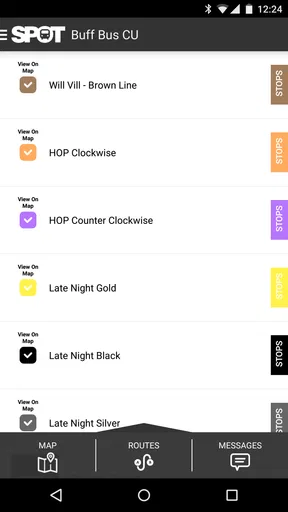
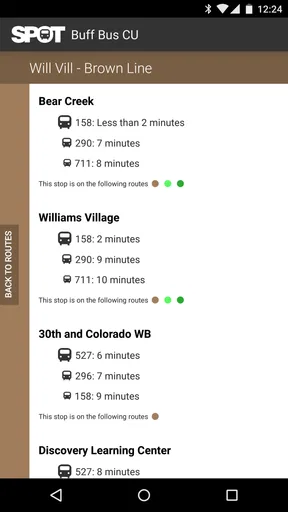
This is the app's strongest verified capability: it delivers arrival predictions while helping plan transit routes. In everyday use, that can reduce the mental work involved in comparing public transport options. A route that looks shorter on a map is not automatically better if it involves an awkward transfer or leaves little room for delay. A route with a slightly later departure may be the more comfortable choice if it produces a more dependable arrival window.
I find this especially useful before leaving home, when I am still deciding whether I have time for breakfast, a quick errand, or an extra few minutes to get to the stop. The important result is not just a line on a map. It is a clearer answer to the question, “If I leave now, when should I expect to arrive?”
Worth Reading Before You Choose

EA SPORTS FC Mobile 26 Is a Bigger Football Game, but It Takes Time

Flipboard Shows What News Apps Must Do Beyond the Feed

Switching to Android Auto Means Rethinking Your Driving Routine

Google Calendar Makes a Crowded Week Easier to Manage

Ludo King Makes the Most of the Minutes Between Plans

Baby Panda World Brings Quick Play to Modern Phones, but Its Game Library Feels Busy
Predictions are useful, not promises
I would not treat any transit prediction as a guarantee, and ETA SPOT should be used with the same sensible caution. Public transport depends on conditions outside the app's control: a vehicle can run late, a connection can be missed, and walking to a stop can take longer than expected. The arrival estimate is therefore a planning aid, not a reason to leave with no buffer at all.
My practical approach is to compare the predicted arrival with the time I actually need to be there. If the appointment is flexible, a close estimate may be enough. If the appointment is important, I would choose a route that gives me room for ordinary delays. This is where the app's focused design can help: it encourages me to evaluate the result as a travel decision rather than blindly follow the first route shown.
The most useful habit is to plan around the arrival time, then add your own margin for walking, waiting, and unexpected delays. That habit makes the app more valuable than simply checking a route at the last second.
What the route-planning focus changes
ETA SPOT makes the most sense for riders who already know that public transport is their main way of moving around. It is not trying to be a broad travel companion for every possible mode. Its purpose is more specific: help transit riders plan a route and understand when they may arrive.
That focus can make the app easier to evaluate. If I need a transit-oriented answer, I can judge it by the quality and usefulness of its arrival planning. If I need detailed walking directions, driving navigation, cycling guidance, or a broad map of every nearby place, I would look toward a larger all-purpose navigation service instead. The choice depends on whether arrival prediction is the main problem I am trying to solve.
How I would use it before and during a trip
For me, the useful question is how to fit the app into an actual day rather than simply open it at the stop. I’d use the predicted arrival to decide when to leave, then revisit the plan when timing matters; thinking through that routine also shows where a second navigation tool can fill a different role.
A simple planning routine
My preferred workflow starts before I am standing at the stop. I first decide the arrival time that matters, then use the route-planning function to see what options are available. Rather than selecting the first result automatically, I compare the predicted arrival with the number of changes and the amount of time I will spend waiting or walking.
This is one of the less obvious benefits of a prediction-centered tool: it encourages a more deliberate comparison. Two routes can both reach the same destination, but one may be easier to manage because it has fewer points where the trip can go wrong. If an option arrives only slightly earlier while demanding a tight connection, I may prefer the slower-looking route. ETA SPOT becomes most helpful when I use its prediction as one part of that judgment instead of treating it as the entire answer.
For a regular commute, I would also use the app to build a personal sense of which departure times are comfortable. A route that works perfectly on paper may feel stressful if I have to rush to the stop. Another departure may be a better routine even if it is not the absolute fastest. The arrival prediction gives me a concrete way to make that tradeoff.
An everyday scenario where it earns its place
Imagine I have an appointment across town and need to arrive before a fixed time. I open the app while getting ready, plan the transit route, and look at the predicted arrival rather than only the departure. If the result leaves almost no margin, I can choose an earlier option or reconsider a transfer-heavy route. Once I am on my way, I can keep the expected arrival in mind and decide whether a delay is still manageable.
That is a realistic use case because the app is not solving an abstract mapping problem. It is helping me answer a practical question before I commit to the journey. The same approach works for arriving at work, meeting a friend, reaching a class, or catching an event. In each case, the prediction matters because the destination has a time attached to it.
There is also a useful emotional benefit. When I have a clear estimate, I spend less time repeatedly checking the clock and wondering whether I chose badly. The app cannot remove transport uncertainty, but it can make the decision feel more informed.
When I would check another tool as well
I would use a general navigation app alongside ETA SPOT when the trip includes substantial walking, driving, cycling, or a destination that is difficult to find from the final stop. A broad service is usually better when I need turn-by-turn guidance across several travel modes or a detailed visual map of the surrounding area.
For a transit-only decision, however, a larger app can sometimes feel overloaded. Extra map layers, business listings, road directions, and unrelated options may make the main question harder to see. ETA SPOT's narrower role is appealing when I already know that public transport is the answer and want to focus on the expected arrival.
The tradeoff is straightforward: a general navigation service offers breadth, while this app offers a more focused transit-planning purpose. I would choose based on the journey, not loyalty to one tool.
The practical tradeoffs behind the focused design
A focused transit planner has tradeoffs beyond route choice, and connectivity is part of that practical picture: I want to make important planning decisions while I can get the information I need, rather than assume the app will behave the same in every network situation. I’ll also consider what to do if a plan becomes uncertain and how to avoid unnecessary checking.
Why a narrow purpose can be a strength
I like that ETA SPOT does not need to be judged as though it were trying to replace every navigation app. Its value comes from concentrating on transit riders and arrival predictions. That makes it a good fit for someone who regularly asks, “Which public transport route gets me there at the right time?”
A focused app can also fit naturally into a two-step routine. I might use ETA SPOT to decide which transit route and departure make sense, then use another tool for detailed walking instructions at the beginning or end. That is not a failure; it is a realistic way to combine tools according to their strengths.
The important limitation is that this approach requires me to know what I want from the app. If I expect one application to handle every part of a complex journey, the narrower scope may feel incomplete. If I see it as a specialist for transit timing, the same scope becomes easier to appreciate.
Where friction may appear
The first possible source of friction is the uncertainty built into arrival predictions. Even an accurate estimate can become less useful when a connection is missed or conditions change. I would avoid planning an important appointment around the last possible minute, especially when the route includes transfers. The app can inform my choice, but it cannot control the network.
The second is that route planning is only as convenient as the information I need to enter and interpret. People who want instant, highly visual guidance may prefer a larger navigation platform with more surrounding context. ETA SPOT is better suited to someone willing to look at the planned journey and make a decision from the result.
The third is the age of the product and its current version. Compatibility with Android 5.0 or later makes it accessible to a wide range of older Android devices, which is helpful if I am not using a recent phone. At the same time, users who expect the newest interface conventions or the broadest modern navigation ecosystem may find a specialist app less polished or less expansive than the biggest alternatives.
What I would check before relying on it
Before depending on the app for a time-sensitive trip, I would run a familiar journey through it and compare the result with my own experience. I would check whether the suggested route matches the transit pattern I normally use, whether the predicted arrival leaves enough breathing room, and whether I still need another app for the walking portions.
This small trial is more useful than judging the app from a single unfamiliar trip. Familiar routes let me notice whether the predictions are practical for my routine and whether the planning flow suits the way I think. It also helps me decide whether ETA SPOT should be my primary transit planner or a secondary check before leaving.
I would also make a habit of checking the estimate again when the journey is important. A plan made earlier can become less relevant as departure approaches. That is not unique to this app, but it matters particularly when the main reason for using it is the predicted arrival.
Who gets the most value from ETA SPOT
The strongest fit is not simply anyone who travels, but someone whose daily decisions depend on reaching a destination by public transport at a sensible time. I’ll weigh that routine against the app’s narrower scope, so it is easier to see whether its arrival-focused approach suits a regular commute or whether a broader navigation option would be more useful.
Best for regular transit riders
The clearest audience is someone who uses buses, trains, or other public transport regularly and wants arrival planning to be more central than general map browsing. Commuters, students, visitors moving between parts of a city, and anyone who often has to coordinate a journey with a fixed appointment can all understand the benefit quickly.
It is also a sensible choice for people who prefer a free tool with a specific job. There is no purchase decision to make, and the Everyone rating makes it suitable for a broad audience. The main question is not whether the app is expensive; it is whether its focused transit workflow matches the way I travel.
I can also see value for someone using an older Android phone. Support for Android 5.0 or later lowers the hardware barrier compared with apps that require a newer operating system. That does not automatically make it the best option for every older device, but it does make the app more approachable for users who are not upgrading frequently.
Who should choose another option
I would skip ETA SPOT if my everyday travel is mostly by car, bicycle, or walking. Its central appeal is tied to transit planning, so a road-navigation or outdoor-navigation app would be more relevant for those routines. I would also look elsewhere if I need one service to combine multiple transport modes with extensive turn-by-turn instructions and rich location details.
It may not be the right choice for someone who wants a complete trip-management system rather than an arrival-focused planner. Likewise, if I need highly detailed information about a complicated destination after leaving the vehicle, I would probably pair it with a broader map service or use that alternative alone.
The average rating of 3.3 shows that the experience is not universally loved, so I would approach it with realistic expectations. That rating does not erase the app's useful idea, but it is a reminder to test the workflow on my own phone and routes before making it the only tool I carry for an important journey.
My final recommendation
ETA SPOT is worth trying when the main problem is not finding a place on a map, but estimating when a transit journey will get me there. I like its focused purpose, especially for planning around appointments and comparing routes by their expected arrival rather than by appearance alone. The best results come from using the prediction thoughtfully, allowing a buffer, and accepting that a specialist app may need help from a broader navigation service.
I would recommend it to a transit rider who wants a free, straightforward planning aid and is comfortable making the final judgment about delays, transfers, and walking time. I would not recommend treating it as an all-purpose navigation replacement. Its real strength is turning transit planning into a clearer arrival-time decision, and that is enough to make it useful for the right person.
After trying it, I would keep it installed if it made my regular routes easier to judge before leaving. If it felt too limited compared with the navigation tools I already use, I would keep it as a secondary option rather than forcing it into a role it was not designed to fill. For riders who value arrival predictions above extra map features, that focused role is precisely why ETA SPOT can earn a place on an Android phone.
Pros
- Provides real-time public transport arrival estimates.
- Helps users compare nearby stops and routes quickly.
- Clear interface makes essential travel details easy to find.
- Useful for planning journeys and reducing time spent waiting.
- Can make daily commuting more predictable and convenient.
Cons
- Accuracy may vary when traffic or service disruptions occur.
- Coverage can differ significantly between cities and transport networks.
- Some features may require location access to work properly.
- Limited usefulness in areas with infrequent public transport updates.
- Battery and mobile data use may increase during active navigation.
FAQs for ETA SPOT
What is ETA SPOT and what can I use it for?
ETA SPOT is designed to help users manage and share estimated arrival information, making it easier to coordinate trips, appointments, pickups, and meetups. Before downloading, check the app’s current description and supported features, because availability may vary by device, region, and app version. Its usefulness depends on whether your contacts also use compatible sharing or communication options.
Does ETA SPOT require location access to work properly?
The app may need access to your location if it calculates or shares an estimated arrival time based on your current position and route. You can usually choose whether to allow location access all the time, only while using the app, or not at all. Limiting permission may affect live updates, accuracy, or automatic arrival calculations, so review the privacy settings carefully.
Is ETA SPOT free to download and use?
You should verify the current store listing before installing ETA SPOT, since pricing, subscriptions, advertisements, and optional purchases can change over time. Even when the initial download is free, some functions may require payment or an upgraded plan. Review the in-app purchase section and subscription terms, including renewal conditions, before confirming any purchase.
Can I share my estimated arrival time with other people?
ETA SPOT is intended for coordinating arrival information, but the exact sharing method may depend on the version of the app and your device. You may need to invite contacts, send a generated link, or use another supported communication service. Check what information is shared, how long it remains available, and whether recipients need the app installed.
Is ETA SPOT available for both Android and iPhone?
Availability can differ between Android and iOS, and some features may not be identical across platforms. Before downloading, visit the official Google Play Store or Apple App Store listing and confirm that your device meets the required operating-system version. Also check recent user reviews and update notes, as compatibility and supported features may change with future releases.


